
Vibra-Jet™ Bin Aerator
Model K
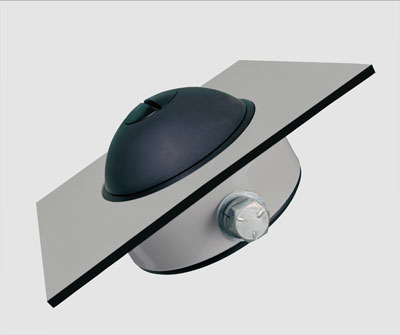
Restores material flowability at low cost
The Model K Vibra-Jet bin aerator, when installed on any storage silo, bin or hopper, can be extremely versatile and effective in getting dry bulk materials, like fine cement, to gravity feed more reliably at a very low cost. Materials which tend to pack, bridge or hang up can be made to flow freely and instantly upon demand.
Balances the natural negative pressures during discharge
Model K Vibra-Jet bin aerators installed at strategic locations on a discharge cone of a storage silo, bin or hopper direct high or low pressure compressed air along the bin wall to reduce the coefficient of friction which exists between the bin wall and the stored material. The compressed air, which is injected in short high-pressure bursts, fully balances the natural negative pressures created during the normal discharge process. By controlling the compressed air pressure and volume, materials once thought to be difficult to handle now gravity feed easily, quickly and automatically.
Maximizes performance and energy
Because every material is unique to itself, the Model K Vibra-Jet bin aerator has the extreme flexibility to throttle the compressed air as required to handle almost any dry bulk solid material which is finer than 20 mesh (800 micron), regardless of its bulk density. This feature also maximizes process performance and minimizes the compressed air demand, plus it reduces the overall energy requirements.
Three seals extend life and reliability
Some unique construction features have been designed into the Model K Vibra-Jet bin aerator to prevent backfeeding and truly set it apart from all other types of bin aerators available. This is extremely important because as the very fine dry bulk materials become fluidized and more flowable they can, under certain circumstances, backfeed into the air source. To prevent this from happening, the Model K Vibra-Jet bin aerator has incorporated three seals. A primary seal at the outer edge and a secondary seal next to it provide an almost impermeable wall to prevent material from trying to backfeed under the gasket. Then, a third and final seal backs up the other two to provide additional assurance against possible backfeeding, even under the most severe of applications. This provides added reliability and extends the life dramatically.
Features:
- Low cost
- Self cleaning
- Low pressure drop
- Abrasion resistant
- Easily installed
- Variable flow
- Adjustable
- Corrosion resistant
- Low energy
- Triple seals
- Uses plant air
- Low profile
- Low maintenance
- Rugged
Download PDF

Request a Quote
Let’s Find the Right Solution for You
Contact usPartner with Dynamic Air, the industry leader in providing reliable, innovative solutions. Our team of experts is ready to understand your unique requirements and design customized solutions tailored to your specific needs, whether it’s pneumatic conveying, equipment manufacturing, or other material handling challenges. Experience the Dynamic Air difference and unlock the potential of seamless material flow, enhanced efficiency, and optimized productivity. Contact us today to discuss your project.