
DC-5™ Air Saver
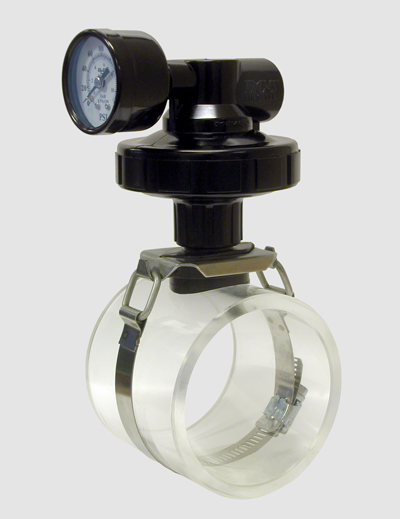
Dynamic Air’s exclusive DC-5 Air Saver technology is the key to complete control of material through the entire conveying line
One of the secrets of a successful and highly efficient pneumatic conveying system, whether it is a high pressure dense phase system or a low pressure dilute phase system, is achieving an optimum pressure balance. Many systems operate in an unstable and/or unbalanced pressure condition. This means the conveying system can be using either too much compressed air or not enough compressed air, both of which are undesirable.
To effectively counterbalance all the friction factors normally inherent in a pneumatic conveying system, Dynamic Air has developed the DC-5 Air Saver technology which accurately controls and pressure balances the pneumatic conveying system.
The DC-5 Air Saver technology achieves the proper pressure balance because it automatically senses the conveying system conditions and reacts instantaneously and accurately without overcompensation. Thus material is conveyed through the conveying line in a smooth, controlled manner and at the desired conveying velocity, to optimize the conveying process for higher performance and reliability.
The DC-5 Air Saver technology is adaptable to almost any type of Dynamic Air pneumatic conveying system regardless of the conveying pressure or vacuum.
Benefits
- Decreased energy consumption
- Improved system reliability
- Ability to convey very fragile materials
- Ability to convey highly abrasive materials
- Ability to convey difficult or cohesive materials
- Ability to convey heavy materials
- Ability to start and stop the conveying process with a conveying line full of material
- Reduced “dynamic loading” at pipe bends by controlling the conveying velocity
- Reduced dust handling requirements
- Reduced material degradation
Download PDF

Request a Quote
Let’s Find the Right Solution for You
Contact usPartner with Dynamic Air, the industry leader in providing reliable, innovative solutions. Our team of experts is ready to understand your unique requirements and design customized solutions tailored to your specific needs, whether it’s pneumatic conveying, equipment manufacturing, or other material handling challenges. Experience the Dynamic Air difference and unlock the potential of seamless material flow, enhanced efficiency, and optimized productivity. Contact us today to discuss your project.