
How Pneumatic Conveying Enhances Safety in Hazardous Material Handling
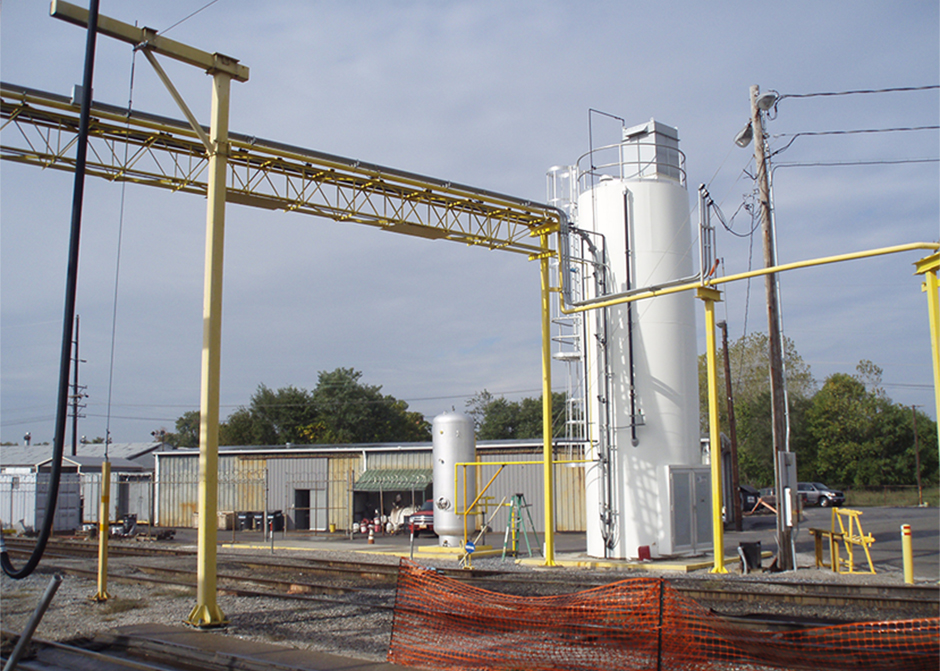
When you’re handling hazardous materials, safety isn’t a “nice to have”. It’s everything.
Whether you’re handling combustible dust, fine powders, or volatile chemicals, even a small failure in your system can lead to serious injury, costly downtime, or worse.
That’s why more facilities are turning to reputable, safe pneumatic conveying systems, like those from Dynamic Air.
Unlike traditional material handling methods, pneumatic conveying offers a sealed, controlled, and highly engineered way to move materials, dramatically reducing risk while improving efficiency and compliance.
Let’s break down exactly how it works with Dynamic Air and why it matters for your hazardous material handling process.
What Is Hazardous Material Handling (and Why It’s Risky)
Hazardous material handling includes transporting and processing substances that can harm people, equipment, or the environment.
This often includes:
- Combustible dust (grain, sugar, chemicals, metals)
- Toxic or fine powders
- Reactive or corrosive materials
- Lightweight particles that easily become airborne
The biggest concern? It’s a toss-up between combustible and toxic materials. Both pose a lethal hazard to plant personnel. When combustible particles become suspended in air, they can ignite under the right conditions causing devastating explosions. And toxic materials can be lethal if breathed or, in some cases, even come in contact with the eyes or skin.
Where Traditional Conveying Systems Fall Short
Older conveying methods like belts, buckets, and screw conveyors weren’t designed with today’s safety expectations in mind. They simply are not dust tight.
Common issues include:
- Open systems that release dust into the air
- Friction and moving parts that create ignition risks
- Material spillage and buildup
- Frequent cleaning requirements (and missed spots)
All of this increases the likelihood of:
- Dust accumulation
- Worker exposure
- Explosion risks
In short: more variables, more risk.
How Pneumatic Conveying Improves Safety
1. Pressure Tight Fully Enclosed, Dust-Free Transport
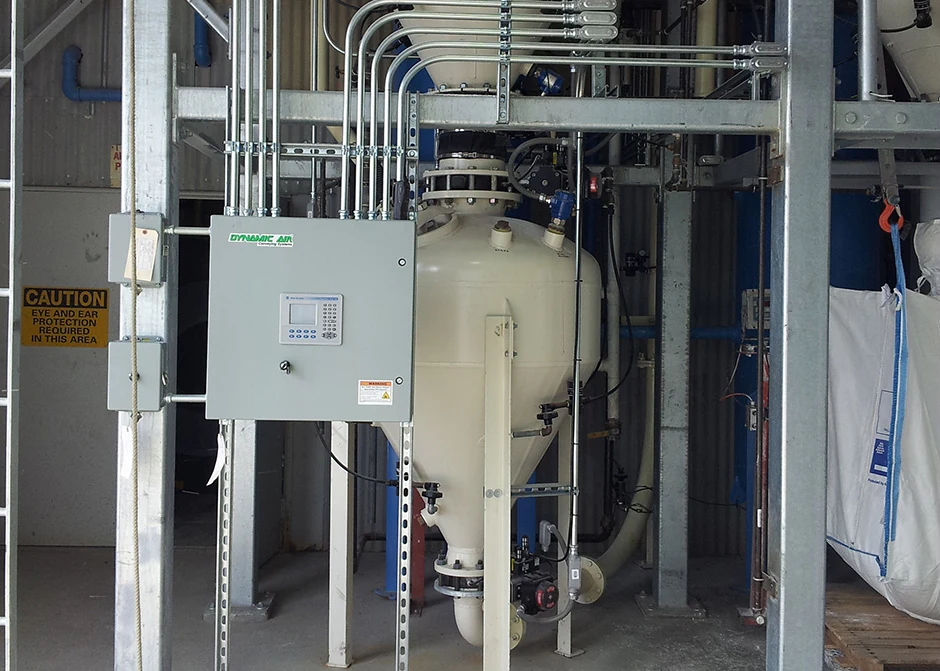
Dynamic Air’s dense phase pressure systems (HDP series) are not just dust tight, they’re pressure tight. And not just a little pressure tight. These systems are pressure tight to 100 PSIG (7 BarG). When coupled with top removal dust filters, these systems keep materials inside a sealed process from start to finish.
That means:
- No airborne dust clouds
- Cleaner air for workers
- The process is isolated from the environment (oxygen and humidity). This allows for the design of inert (N2) process environments, if necessary, for combustible materials, or prevents moisture from entering the process in the case of reactive materials.
This is one of the simplest and most powerful ways to improve safety in hazardous material conveying solutions.
2. Built-In Explosion Prevention
Modern systems with Dynamic Air are engineered for explosion-proof pneumatic conveying, helping reduce or eliminate the conditions that cause explosions.
Key features may include:
- Explosion venting or suppression systems
- Inert gas systems to reduce oxygen levels
- Hazardous area classification suitable instruments
- Minimized moving parts and elimination of “spark generators”
This directly supports explosion prevention in conveying systems, especially in industries dealing with combustible dust, like the chemical industry.
3. More Reliability, Less Risk
A pressure tight pneumatic conveying system is not so pressure tight when you need to remove piping components to clear a plug. This is where Dynamic Air’s exclusive DC-5 Air Saver technology shines. The Dynamic Air-5 Air Saver system is constantly and precisely directing the conveying gas to the point along the pipe line it is needed most to eliminate plugging.
For most pneumatic conveying processes, reliability is important to keep the plant running. But in the case of hazardous material processes, keeping the hazardous material inside the process is a critical safety requirement.
4. Reduced Worker Exposure
Automation is a major safety win.
With pneumatic conveying:
- Workers don’t need to be near the process. They can work from a control room far from the hazardous process.
- Exposure to toxic or fine particles is minimized
- Ergonomic risks are reduced
This is especially important in industries like chemical, where exposure to certain airborne particles can impact long-term health.
Why Dense Phase Pneumatic Conveying Is Even Safer
Not all pneumatic systems are created equal.
Dense phase pneumatic conveying, a specialty of Dynamic Air, moves material at lower velocities and higher pressures.
This creates major safety advantages such as:
- Less particle degradation (reduces dust creation)
- Less dust generation at the receiving vessel
- Minimal wear on equipment (= longer maintenance intervals)
- Low conveying gas consumption, which makes inert gas (N2) conveying practical and economical.
- + MORE
For facilities focused on industrial dust control systems and safety, dense phase is often the preferred solution.
Best Practices for Maximum Bulk Material Handling Safety
Even the best system needs the right strategy behind it.
To get the most out of your safe pneumatic conveying system, follow these best practices:
- Conduct a Dust Hazard Analysis (DHA)
- Properly ground equipment to prevent static potential
- Install explosion protection systems where needed
- Determine the NEC hazardous classification areas and design accordingly. Sometimes the hazard is not due to the material conveyed, but due to a nearby process in the plant.
- Train employees on safety protocols
Safety isn’t one feature, it’s a system-wide approach.
Why Dynamic Air Is a Leader in Hazardous Material Conveying
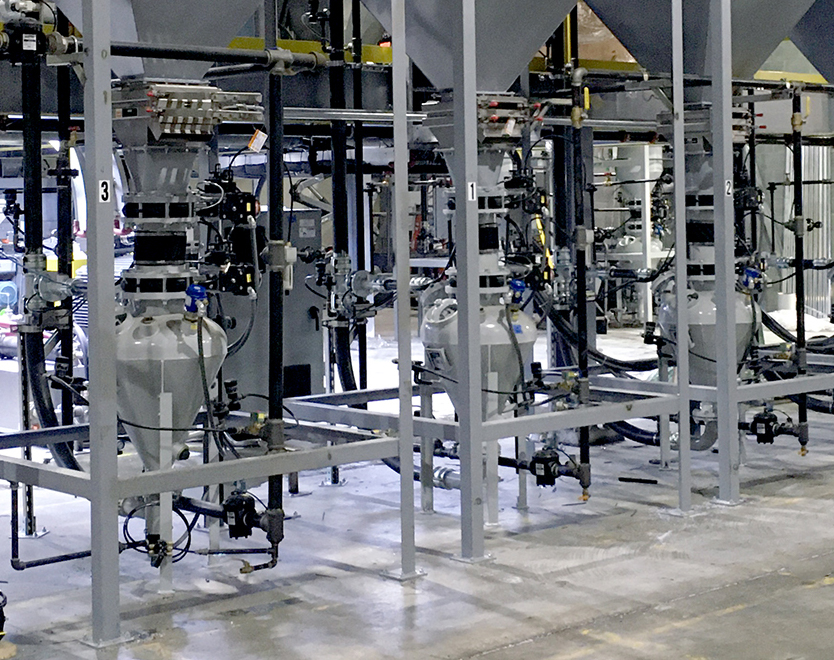
At Dynamic Air, safety is engineered into every solution. We have supplied thousands of systems that are located in hazardous areas or convey hazardous materials.
Our pneumatic conveying systems are designed to:
- Handle abrasive, fragile, and hazardous materials
- Minimize dust and explosion risks
- Deliver long-term reliability
With deep expertise in bulk material handling across many industries, Dynamic Air helps facilities operate safer, cleaner, and more efficiently.
Partner With Dynamic Air Today
If you’re still relying on open or mechanical conveying systems, you’re taking on unnecessary risk. At the end of the day, the safest system isn’t just the one that moves material, it’s the one that protects everything around it.
Contact us today to explore how we can help your material process stay safe, compliant, and performing well for years to come.
Common Questions About Pneumatic Conveying & Safety
How does pneumatic conveying reduce combustible dust risks?
Pneumatic conveying systems reduce combustible dust hazards by isolating the conveying process from the plant environment, preventing dust from escaping the conveying process. This containment minimizes dust accumulation, lowers the risk of ignition, and supports safer, cleaner operations.
What is the difference between dense phase and dilute phase pneumatic conveying?
Dense phase pneumatic conveying moves the conveyed material in discreet slugs at low velocity which reduces material degradation or pipeline component wear.
Dilute phase pneumatic conveying suspends the conveyed material in a gas stream at higher air velocity, but may generate more particle degradation and pipeline component wear.
Is pneumatic conveying safer than mechanical conveying systems?
Yes. Compared to belts or screw conveyors, pneumatic conveying systems are enclosed, which significantly reduces dust emissions, contamination, and exposure risks. This makes them a safer option for hazardous material conveying solutions, especially in regulated environments.
Also, dense phase pneumatic conveying systems do not have moving chains and sprockets, belts and sheaves, rollers and belts, or augers which are a safety hazard for plant personnel.
What types of hazardous materials can be handled with pneumatic conveying?
Pneumatic conveying is ideal for a wide range of hazardous materials, including combustible dust, toxic powders, fine chemicals, ash, metals, and plastic resins. These systems are especially effective for materials that must be handled in a dust-free and controlled environment.
Let’s Find the Right Solution for You
Contact usPartner with Dynamic Air, the industry leader in providing reliable, innovative solutions. Our team of experts is ready to understand your unique requirements and design customized solutions tailored to your specific needs, whether it’s pneumatic conveying, equipment manufacturing, or other material handling challenges. Experience the Dynamic Air difference and unlock the potential of seamless material flow, enhanced efficiency, and optimized productivity. Contact us today to discuss your project.